Quick answer: If your treatment in India will run past the end of your visa, you apply for a medical visa extension online through the e-FRRO portal (indianfrro.gov.in) while you are still in India and before your current visa expires. The key document is a fresh letter from your treating hospital explaining why more treatment time is needed. Attendants should apply at the same time, because their visas are tied to the patient’s. Whether you also need to register with the FRRO depends on your visa type and length of stay, so check the conditions printed on your visa or e-Visa approval as soon as you arrive.
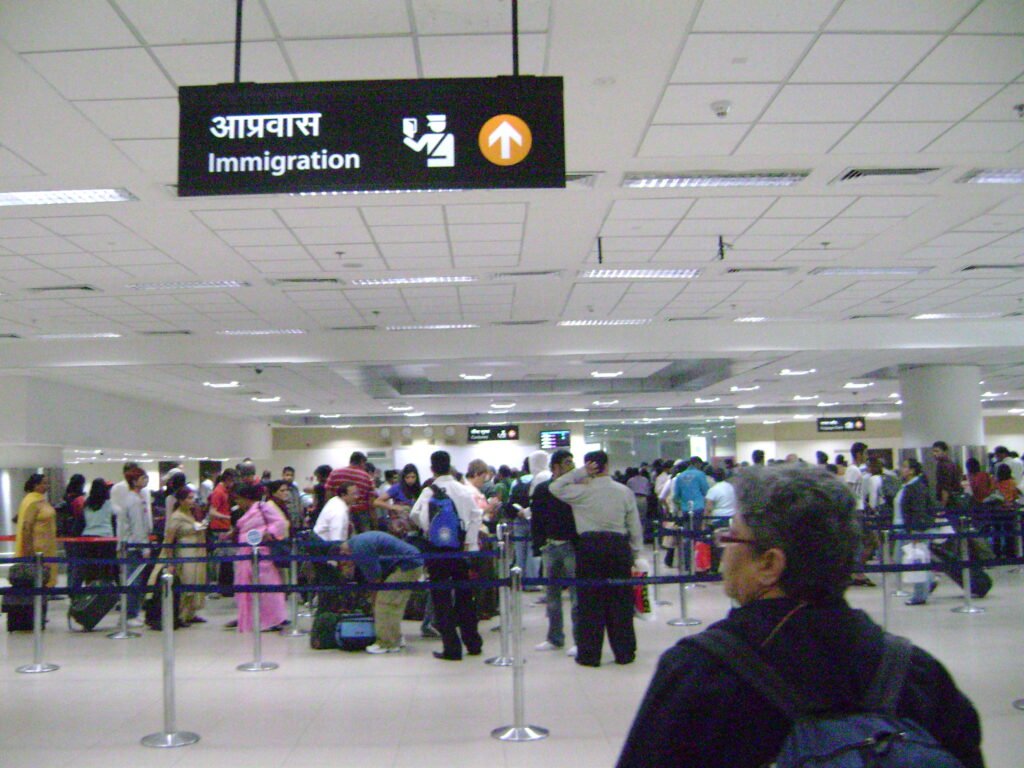
Treatment plans change. A surgery is postponed, a scan shows something new, recovery takes longer than the doctor first expected, or chemotherapy needs extra cycles. When that happens, the visa you arrived on may not cover the full stay. This guide explains, in plain steps, how FRRO registration and medical visa extension work, what documents families usually need, and what to avoid. It sits alongside our India medical visa guide, which covers applying before you travel.
What is the FRRO and why does it matter for patients?
The FRRO (Foreigners Regional Registration Office) is the government office that handles registration, visa extension, visa conversion and exit permits for foreign nationals already inside India. Smaller districts have an FRO (Foreigners Registration Officer) instead. Both work under the Bureau of Immigration, part of the Ministry of Home Affairs.
Almost all of this now happens online through e-FRRO. The portal lists registration, visa extension, visa conversion and exit permit among its services, and it states that services are granted electronically. In most cases you will not need to stand in a queue, although the office can call you for an interview if it needs to check something.
India’s immigration law was updated by the Immigration and Foreigners Act, 2025, and the related Rules were amended again in June 2026. If you read older blog posts, some details may be out of date, so always check the live portal.
e-Medical visa vs regular Medical visa: the key differences
The visa you hold decides what you can do when treatment runs long. Here is a side-by-side view based on official Indian government sources at the time of writing.
| Point | e-Medical visa (online) | Regular Medical visa (embassy/consulate) |
|---|---|---|
| How you get it | Applied for online on indianvisaonline.gov.in | Applied for through an Indian mission or its visa centre |
| Validity shown on official portal | One year from arrival, multiple entries (e-M1/e-M3 categories), per the e-Visa page | Generally up to one year or the treatment period, whichever is less, per embassy guidance |
| Attendants | Up to two e-Medical Attendant visas per e-Medical visa | Medical Attendant visa, usually for spouse, children or blood relatives, valid co-terminus with the patient’s visa |
| Extension inside India | The e-Visa portal says e-Visas are non-extendable and non-convertible; extension is only possible if the FRRO allows it in your case | Can be extended in India through e-FRRO with supporting medical documents |
| FRRO registration | Depends on the stay conditions on your approval; required if you are allowed to stay beyond 180 days | Required within 14 days of arrival if the visa is valid for more than 180 days (or if endorsed “registration required”) |
An important note on e-Medical visas: older government advisories described the e-Medical visa as 60 days with triple entry, extendable up to six months by the FRRO on a case-to-case basis. The current e-Visa page lists one-year, multiple-entry e-Medical categories and also says e-Visas cannot be extended or converted. Because these rules have changed several times, treat the stay conditions printed on your own Electronic Travel Authorisation (ETA) as the final word, and check with the FRRO through e-FRRO if anything is unclear.
Who must register with the FRRO?
Registration means recording your stay with the FRRO and receiving a Registration Certificate or Residential Permit. It is not the same as an extension, but you often need one before or alongside the other.
- Regular Medical visa valid for more than 180 days: Indian missions state you must register with the FRRO or FRO within 14 days of arriving in India.
- Visas valid for 180 days or less, or multi-entry visas that cap each stay at 180 days: under the June 2026 amendment, if you need to stay beyond 180 days you must register before that 180-day period ends. Reports on the amendment say such longer stays are now allowed only in emergent circumstances, so a clear hospital letter matters.
- Any visa endorsed “registration required”: register as the endorsement says, whatever the length.
- Some nationalities (for example, Pakistani nationals) have special, shorter reporting rules. Check your visa endorsement.
Separately, the hotel, guesthouse or landlord where you stay must report your stay to the authorities (commonly called the C-Form or Form C). Hospitals that admit or house foreign patients also have reporting duties. You do not file these yourself, but you should ask your hotel or host for confirmation that it has been done, because the e-FRRO application may ask for residence proof.
When should you apply for a medical visa extension?
Apply as soon as your doctor tells you treatment will run past your visa end date. The e-FRRO portal itself advises applying at least two weeks in advance, and in practice families do better starting four to six weeks before expiry. That leaves time for the hospital to prepare its letter, for the FRRO to ask questions, and for an interview if one is called.
Do not wait until the last few days. If your visa expires while an application is still pending, or if you never applied, you are in overstay, and that is much harder and costlier to fix.
e-FRRO step by step: how to apply for an extension
The exact screens change from time to time, but the process generally looks like this.
- Be in India and have an Indian mobile number. e-FRRO sends one-time passwords and status updates by SMS and email, so you need a working Indian SIM and a personal email address (the portal says personal email is mandatory).
- Create a user ID on indianfrro.gov.in. Enter your passport and visa details exactly as they appear on the documents.
- Choose the right service. Select “Visa Extension” (or “Registration” if you also need to register) and your visa type, for example Medical or Medical Attendant.
- Fill in your India address. Use the hotel, guesthouse or rented flat where you actually stay. The FRRO with jurisdiction over that address will handle your case.
- Upload documents. The portal asks for a passport-size photo in JPG (3.5 x 3.5 cm or 3.5 x 4.5 cm, up to 1 MB) and scanned PDFs of each document (up to 1 MB each).
- Pay any fee online. Fees depend on visa type, nationality and length of extension, and the portal calculates them. Check the amount on e-FRRO at the time of applying; we do not list fees because they vary.
- Track your application. Check email and SMS daily. If the FRRO asks for more documents or calls you for an interview, respond quickly.
- Download the approval. Once granted, the extension or Residential Permit is issued electronically. Keep a printed and a phone copy with your passport.
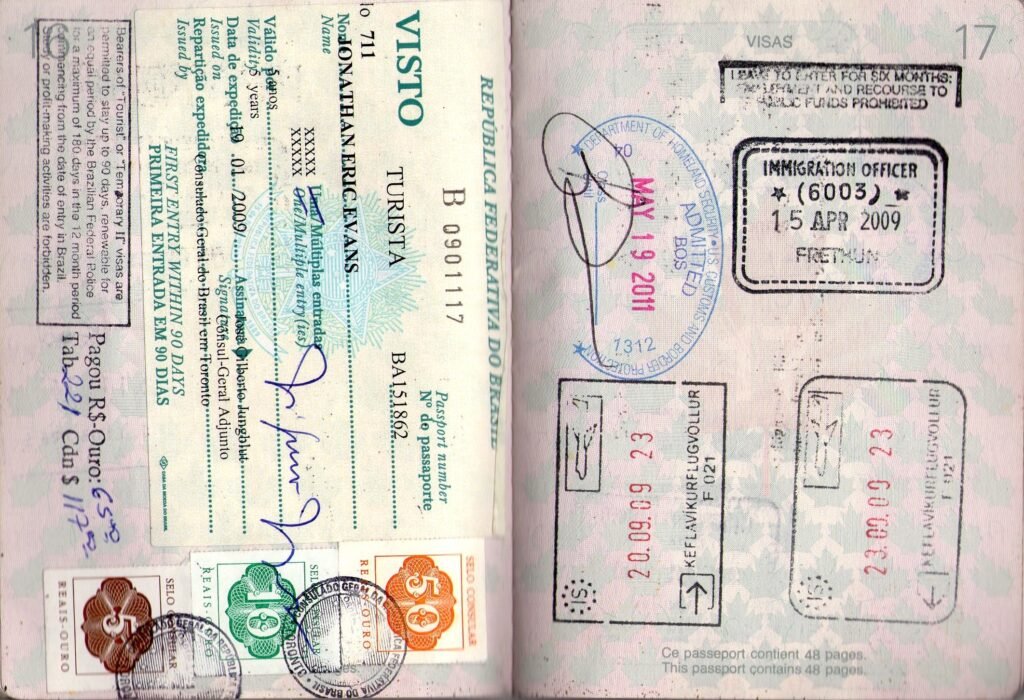
Documents typically needed
The FRRO decides what it needs in each case, but these are the documents families are most often asked for.
| Document | Why it is needed | Tip |
|---|---|---|
| Passport (photo page) and current visa or e-Visa approval | Proves identity and current status | Passport should have enough validity left for the extension period |
| Recent passport-size photo | For the permit record | Plain white background, JPG within portal size limits |
| Letter from the treating hospital | Explains the diagnosis in general terms, the treatment still needed and the expected duration | On hospital letterhead, signed by the treating doctor, dated recently, with the patient’s passport number |
| Proof of residence in India | Shows where you are staying | Hotel C-Form confirmation, rent agreement or host’s address proof |
| Arrival details | Confirms when you entered | Keep your boarding pass or entry stamp page |
| For attendants: patient’s documents and relationship proof | Attendant status depends on the patient | Upload the patient’s hospital letter and passport copy too |
Embassy guidance asks for medical certificates from recognised hospitals (for example, government, NABH-accredited or similar recognised institutions). If your hospital has an international patient desk, ask it to prepare the FRRO letter, because these teams usually know the wording the local FRRO expects. Our medical travel documents checklist lists what to carry from home.
Extending attendant visas together
Medical Attendant visas are issued to accompany the patient and are valid only as long as the patient’s medical visa. In practice this means:
- Each attendant applies separately on e-FRRO, but at the same time as the patient.
- Each attendant’s application should include the patient’s hospital letter and passport copy, plus proof of the relationship where possible.
- An attendant usually cannot be given more time than the patient. If the patient’s extension is refused or shorter, the attendant’s will follow.
- For e-Medical visas, only two e-Medical Attendant visas are granted per patient, so plan in advance if family members want to take turns.
What is an exit permit and when do you need one?
An exit permit is permission from the FRRO to leave India. It is not needed for a normal departure on a valid visa. It is usually needed when something has gone wrong: for example, you overstayed, your visa was cancelled, your passport expired or was replaced in India, or the FRRO has told you that you need one. Exit permits are applied for through the same e-FRRO portal.
If your passport is expiring during treatment, contact your country’s embassy or high commission in India first. A visa cannot be extended on an expired passport, and a new passport usually means the FRRO must transfer your visa or issue an exit permit.
What happens if you overstay?
Overstay is treated seriously. Section 23 of the Immigration and Foreigners Act, 2025 provides that a foreigner who stays beyond the visa period can face imprisonment of up to three years, a fine of up to ₹3 lakh, or both. In practice, outcomes depend on the facts and the authority’s decision, but even a short overstay can mean penalties, delays at the airport, and difficulty getting an Indian visa in future.
If you have already overstayed, do not try to leave quietly. Apply through e-FRRO to regularise your stay or for an exit permit, explain the medical reasons, and attach the hospital letter. Acting quickly and honestly is the safest route.
Practical tips that save time
- Ask the doctor early. At every review, ask: “Will treatment finish before my visa ends?” If the answer is unclear, request the FRRO letter anyway.
- Get one letter per person. Make sure the patient’s and each attendant’s details match their passports exactly.
- Keep scans ready. Store PDFs of passports, visas, photos and the hotel C-Form confirmation on your phone, each under 1 MB.
- Do not move without updating. If you shift from a hotel to a rented flat, the new host should report your stay, and your FRRO address may need updating.
- Check your nationality’s rules. Patients from neighbouring countries may have different visa routes; see our India medical visa guide for Bangladesh, Myanmar and Nepal.
- Check insurance and leave. A longer stay can affect travel insurance and costs; our guide to travel insurance for treatment in India explains what to ask.
- Budget for the extra weeks. Longer stays add accommodation and food costs; see budget stays and food near hospitals.
Whether you are being treated in Chennai, Bangalore or Delhi, the process is the same online system, although each FRRO office may ask for slightly different supporting papers. For the wider picture of planning treatment here, read our complete guide to medical tourism in India.
How NEIMHAANS helps
NEIMHAANS is a non-clinical patient navigation service that has supported families travelling for treatment since 2007. When treatment runs long, we help you keep track of visa end dates, coordinate with the hospital’s international desk for the FRRO letter, organise your documents and scans for e-FRRO, and arrange longer stays near the hospital. We do not provide legal or immigration advice, and final decisions rest with the FRRO. See our support packages.
Sources
- Bureau of Immigration: e-FRRO portal (services, photo and upload requirements, instructions)
- Government of India e-Visa page: e-Medical and e-Medical Attendant visa conditions
- Embassy of India, Abu Dhabi: Medical and Medical Attendant visa guidance (registration within 14 days, attendant rules)
- Embassy of India, Brussels: medical treatment visa and FRRO extension guidance
- Consulate General of India, Edinburgh: earlier e-Visa advisory (e-Medical entries and attendant limit)
- Ministry of External Affairs: checklist for FRRO/FRO registration formalities
- Immigration and Foreigners Act, 2025, Section 23 (penalties)
- Drishti IAS: summary of June 2026 amendments to the Immigration and Foreigners Rules, 2025
Frequently asked questions
Can I extend my medical visa while I am in India?
Yes, a regular Medical visa can usually be extended from inside India through the e-FRRO portal, supported by a letter from the treating hospital. e-Visas are described as non-extendable on the official portal, so e-Medical visa holders should check their options with the FRRO through e-FRRO well before expiry.
How early should I apply for a medical visa extension in India?
The e-FRRO portal advises applying at least two weeks in advance, but starting four to six weeks before your visa expires is safer. This leaves time for the hospital letter, FRRO questions and any interview.
Do e-Medical visa holders need to register with the FRRO?
It depends on the stay conditions on your e-Visa approval. Under the June 2026 rule change, anyone on a visa of 180 days or less who needs to stay longer must register before the 180-day period ends.
What documents are needed for a medical visa extension?
Usually your passport, current visa, a recent photo, proof of residence such as the hotel’s C-Form confirmation, and a recent signed letter from the treating hospital explaining the further treatment and expected duration. The FRRO may ask for more.
Can my attendant’s visa be extended with mine?
Yes. Attendants apply separately on e-FRRO at the same time as the patient, attaching the patient’s hospital letter. An attendant’s visa is tied to the patient’s, so it normally cannot run longer than the patient’s.
How much does a medical visa extension cost?
Fees vary by nationality, visa type and extension period, and the e-FRRO portal calculates them during the application. Check the amount shown on indianfrro.gov.in when you apply.
What happens if my visa expires during treatment?
You are in overstay, which can lead to penalties under the Immigration and Foreigners Act, 2025, including fines of up to ₹3 lakh. Apply on e-FRRO immediately to regularise your stay or for an exit permit, with the hospital letter explaining the medical reason.
This article is general information, not medical, legal, insurance or financial advice. Rules, schemes and hospital policies change, so always confirm details with your hospital, insurer or the relevant authority.